Environmental comfort in the workplace
· 3 min
The key drivers of environmental comfort in high-end offices — thermal, visual, acoustic, air quality and ergonomics — and their practical impact.
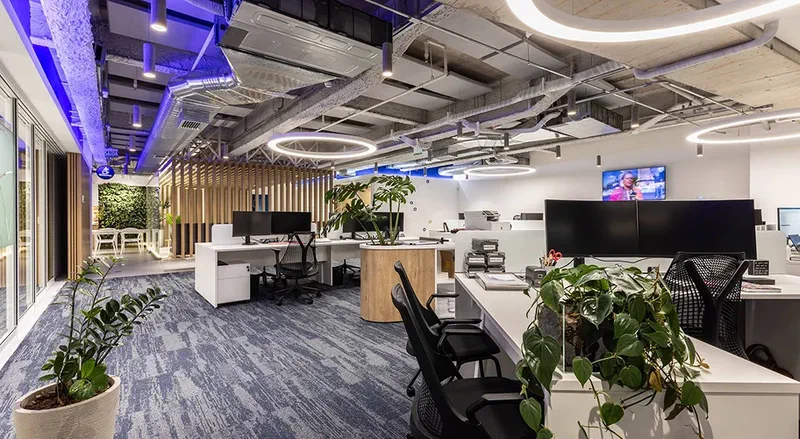
In the world of corporate projects, the environmental quality of the built environment — that is, how well it supports people’s well-being, health and productivity — has stopped being a mere supporting factor and become one of the key competitive differentiators in design. In this article, written for the Easy blog, we explore the main drivers of environmental comfort in workplaces, with a focus on high-end offices, and point out practical implications for architects, interior designers and corporate space managers.
1. What is “environmental comfort” in the context of offices
The term “environmental comfort” refers to a state of satisfaction among the occupants of a built environment regarding the thermal, visual, acoustic, air quality and ergonomic conditions of the space. In the context of offices, this means that an employee or visitor doesn’t just “survive” the environment, but feels comfortable enough to focus, collaborate and innovate — staying longer with less physical and mental wear.
- Thermal comfort: temperature, humidity, air speed and radiation directly influence comfort and performance.
- Visual comfort: adequate lighting (balancing natural and artificial light), glare control and appropriate color/color temperature.
- Acoustic comfort: noise levels, reverberation, sound insulation.
- Air quality and ventilation: air renewal, pollutant control, CO₂ levels, humidity.
- Ergonomics and spatial layout: adjustable furniture, layout that accounts for flows, breaks and focus zones.
- Psychological and emotional comfort: a well-designed environment conveys care, boosts well-being and reduces stress.
2. Why environmental comfort matters — tangible benefits
- Increased productivity: favorable environmental conditions improve cognitive performance and concentration.
- Improved well-being, reduced fatigue and turnover.
- A brand differentiator for client companies: the perception of a “premium office.”
- Alignment with ESG trends and building certifications.
3. Key design drivers for architecture offices
Brightness and lighting
- Maximize natural light entry — large windows, glazed façades and adequate shading.
- Arrange workstations to avoid direct glare and reflections.
- Artificial lighting with appropriate color temperature and automated control.
Thermal comfort and ventilation
- Size air conditioning and ventilation systems for optimal comfort.
- Ensure the absence of uncomfortable drafts.
- Include passive strategies such as cross ventilation and smart façades.
Acoustics
- Treat sound in open environments with absorbent materials.
- Ensure adequate sound insulation in meeting rooms and focus areas.
- Plan layouts with zones for concentration and collaboration.
Biophilia and materials
- Introduce vegetation and natural elements such as wood and stone.
- Use materials with low volatile organic compound emissions.
- Include high-quality finishes that contribute to comfort and aesthetics.
Layout, ergonomics and flexibility
- Select adjustable, ergonomic furniture.
- Plan balanced zones for focus, collaboration and rest.
- Ensure spatial flexibility to adapt the environment to new ways of working.
4. Practical implications and checklist for Easy Construtora projects
- Include environmental comfort metrics in the brief.
- Run thermal, acoustic and lighting comfort simulations.
- Integrate multidisciplinary teams (architecture, HVAC, lighting, acoustics).
- Select materials and finishes that favor comfort and sustainability.
- Apply vegetation and biophilic elements.
- Zone environments according to use type and level of environmental control.
- Use automation to monitor and adjust comfort in real time.
- Carry out post-occupancy evaluation to validate results.
- Communicate the value of environmental comfort to Easy’s clients.
5. Conclusion
Environmental comfort has stopped being a “luxury” and has become a fundamental part of the quality of modern corporate environments. For Easy, incorporating these principles from concept through final delivery reinforces its positioning in the pursuit of excellence in delivering environments that combine form, function and comfort, transforming the everyday experience of those who use them.