Why your corporate office doesn't need to be demolished
· 3 min
New corporate office projects are down, but companies with their own headquarters aren't demolishing them: they're renovating with well-executed retrofit.
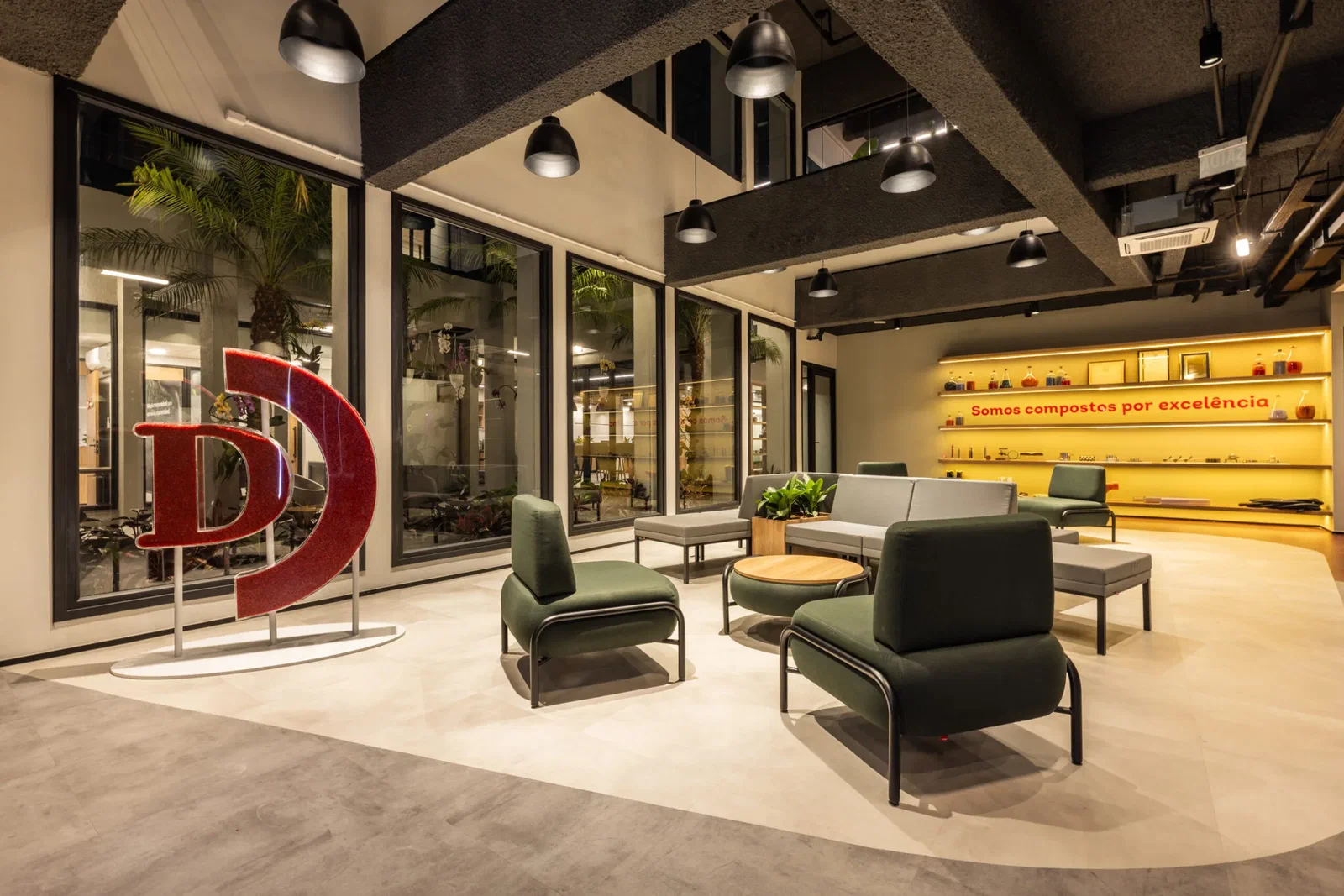
Two years ago, the narrative was the same: remote work would empty out offices, entire buildings would turn into dead inventory, the corporate format’s days were numbered.
Part of that was confirmed — new corporate office projects are at their lowest volume in years. But companies that already own their headquarters aren’t demolishing them. They’re renovating.
The symptom was misread
It wasn’t the office that lost its function. It was the occupancy format that became obsolete. A building designed to hold 100% of the headcount, five days a week, doesn’t make sense when actual occupancy varies between 40% and 90% depending on the day of the week.
Rows of fixed desks and cubicle after cubicle were built for a reality these companies no longer live in. What replaces that is less fixed square footage and more adaptive capacity — a layout that can handle a full Monday and a Thursday at 40% occupancy without becoming underused space.
What the market is doing with that inventory
There is a significant volume of buildings, 15, 20, 30 years old, that house the headquarters of large companies. They won’t be demolished — the cost and construction time of a new building don’t justify it, and the location is usually too good to give up. The path is a deep renovation, without changing address.
That changes the office’s competitive parameter. Physical presence is no longer the rule but a choice — a company that wants to keep talent there competes on comfort, lighting, acoustics, and furniture quality. Movable partitions have become infrastructure, not a finishing item: the layout changes configuration according to the week’s demand, without construction work, without downtime.
The difference between a renovation and a well-executed retrofit
There are two paths. The first treats retrofit as a minor renovation — swap the flooring, repaint the walls, fix what’s visible. It works, but it doesn’t change the category of the space. The second treats corporate retrofit as an operational design project: it understands the real occupancy flow by department, and resolves electrical, HVAC and cabling before finishes. The difference is technical, but the perceived impact is of another order — a space that has become a strategic asset, not one that’s merely cosmetically updated.
The business impact
A traditional construction timeline — two years, the entire company out of the building — isn’t viable for companies that need to keep operating. A well-executed retrofit solves this on three fronts: faster (months, not years), cheaper, and operational — the work progresses in phases, isolating only the areas under intervention while the rest of the building keeps running.
That changes the question for whoever is hiring. It stops being “is it worth renovating” and becomes “who can do this renovation without stopping my company for months.”
Corporate offices aren’t going to disappear. They’re going to transform. Whoever starts moving in this direction now builds an advantage before the rest of the market realizes where the opportunity is.
If your company is evaluating this kind of renovation, it’s worth having at the table someone who already executes corporate retrofit in active operations, without stopping the client’s business — get in touch with our commercial team.